
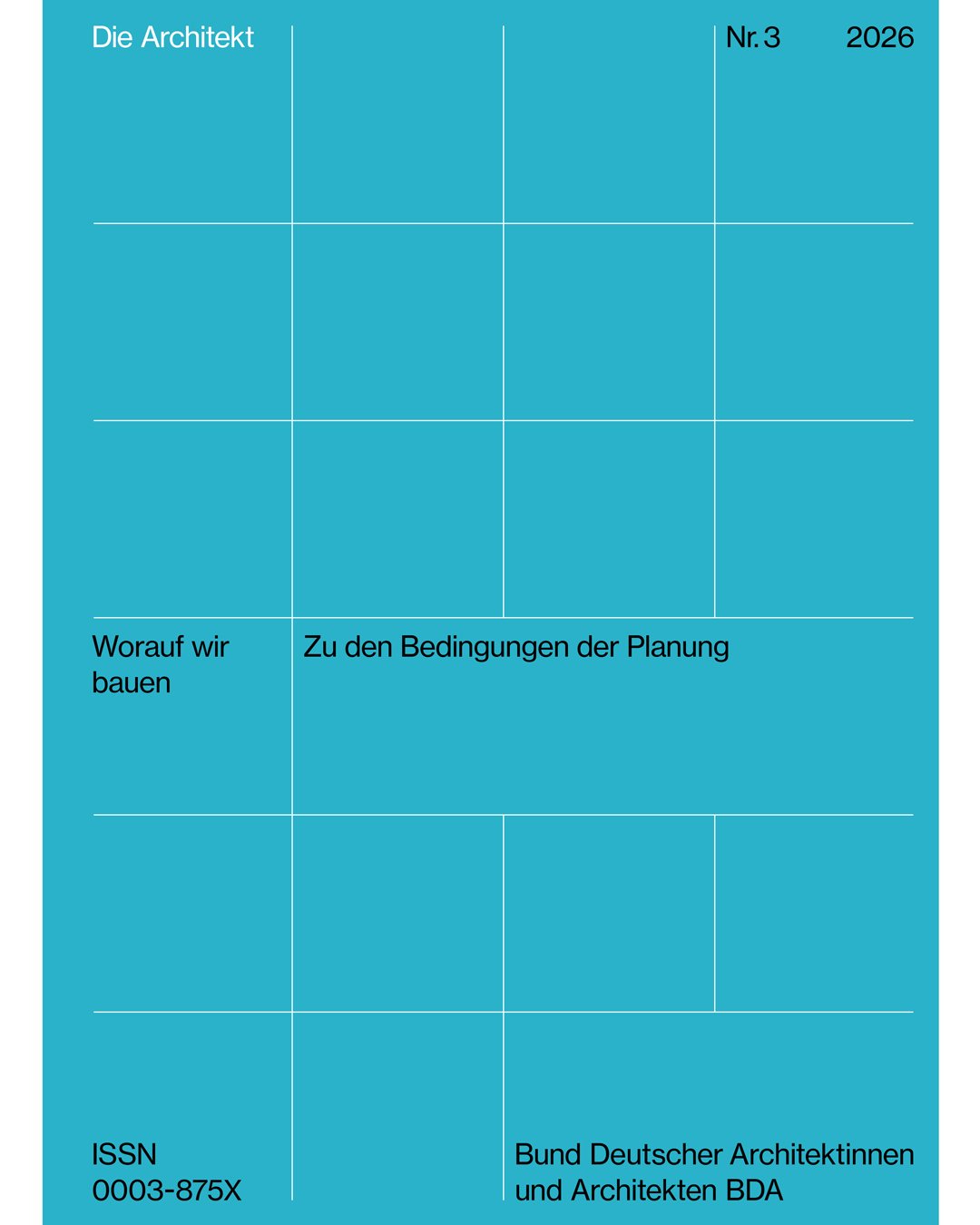
Henley Halebrown's book reviewed in 'Die Architekt'
September 2026
Henley Halebrown's 'Building for Society 2010-2022' has been reviewed by David Kasparek in Die Architect, the magazine of the German BDA.
‘Simon Henley and Gavin Hale-Brown have been running their joint architectural practice in London since 1995; now a monograph on their work has been published, as beautifully crafted as it is compelling in content. The title alone makes it clear how Henley and Hale-Brown frame their work: ‘Building for Society 2010–2022’ – building for society. In the introductory interview, Simon Henley outlines how the sensitivity to place and environment that characterises the practice’s work is something that he and Hale-Brown have absorbed more through travel and observation than through formal academic study: Japanese architecture and projects by Carlo Scarpa, whom Gavin Hale-Brown gets to know through work placements and whilst travelling, is just as influential as the vast landscapes of the Midwestern USA, which Simon Henley explores whilst studying.
The book showcases twelve projects: residential buildings, as well as commercial and educational buildings, both new builds and refurbishments. They demonstrate the depth of engagement with which Henley, Hale-Brown and their team engage with the future users, not least to raise their awareness of the site’s history during what can sometimes be a lengthy process. This collaboration creates a foundation of shared values and, consequently, buildings that respond to culture and climate, fostering a sense of affection among their users that leads them to look after and, in turn, value these spaces.
The structure of the book makes it clear just how much architecture-making involves reflection. Not only because the projects are described and contextualised in reviews by external authors, but also because texts by Simon Henley himself are regularly included. In these, the architect engages with the architecture of others and, through this reflection, becomes a theorist. A particularly wonderful read, for example, is the essay ‘On Not Living in a Victorian Terrace House’ about life in the housing estate ‘Alexandra Road’ in the London borough of Camden. Designed by Neave Brown in 1968 and completed in 1978, this housing estate is a prime example of Brutalism and provides the author with an opportunity to question his own work. Architectural responses to this are then repeatedly illustrated by the projects featured in the book. You can see the impetus with which they were designed, and which Gavin Hale-Brown illustrates with the following aim: “Buildings should continue to evolve with age, nurtured by shared experiences and memories.” The architecture of Henley Halebrown consistently grants this potential to the city, to people and, thereby, to itself. ’ David Kasparek